
The NSS Unit of BPIT Organized an Old Cloth Donation
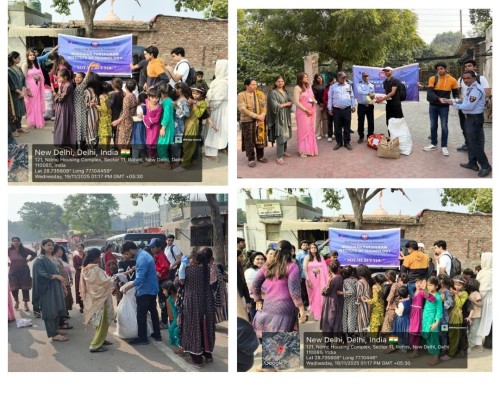
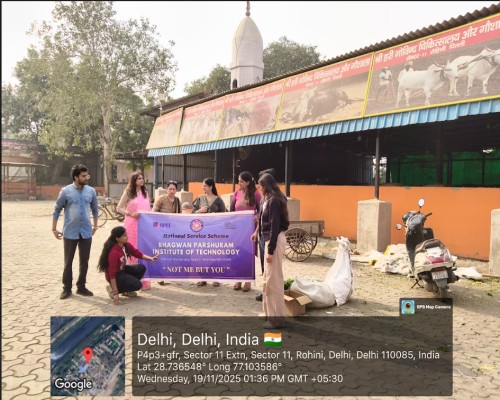
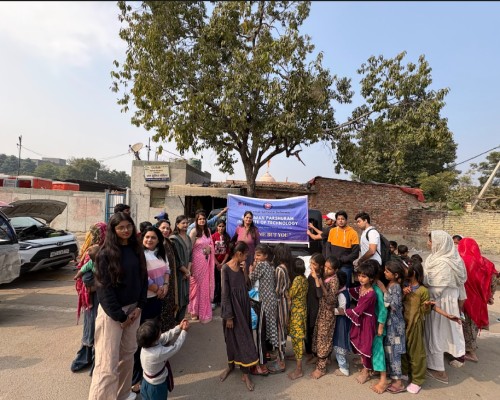
The NSS Unit of BPIT organized an Old Cloth Donation Drive to support underprivileged families living in nearby slum areas. Students actively participated by donating clean and wearable clothes, ensuring that the items collected could be directly used by those in need. The initiative not only helped provide basic necessities to disadvantaged communities but also instilled a sense of empathy and social responsibility among students. Volunteers efficiently managed the collection and distribution process, making the drive a meaningful success. Such activities play an important role in building a compassionate and socially aware campus environment.
Clean Delhi Green Delhi Campaign
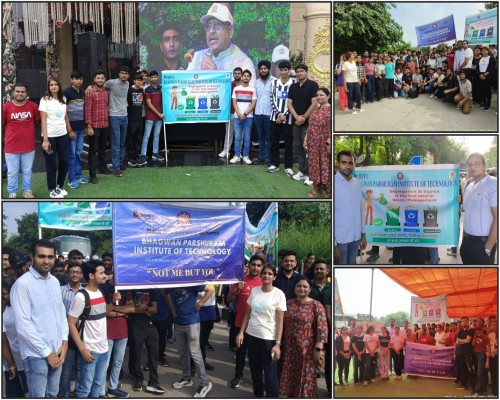
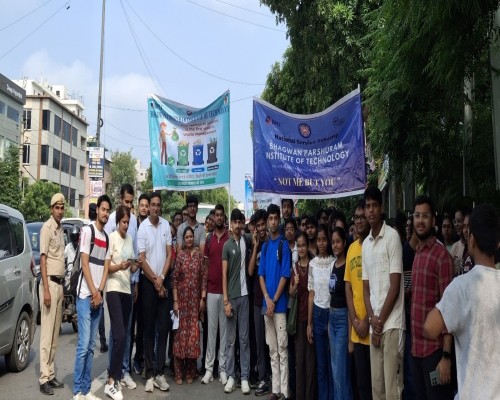
The NSS CELL of BPIT actively participated in the Clean Delhi, Green Delhi campaign on
26th August 2025, a mass awareness initiative organized by the Government of Delhi and MCD
Rohini Zone to promote cleanliness, greenery, and civic responsibility.
The event commenced with a spirited march from BPIT campus to Swarna Jayanti Park, where over 10,000 participants, including students, NGOs, RWAs, corporate CSR teams, and
public figures, assembled. The march highlighted the importance of “Jan Bhagidari”—people’s
participation in governance—under the Whole of Society approach.
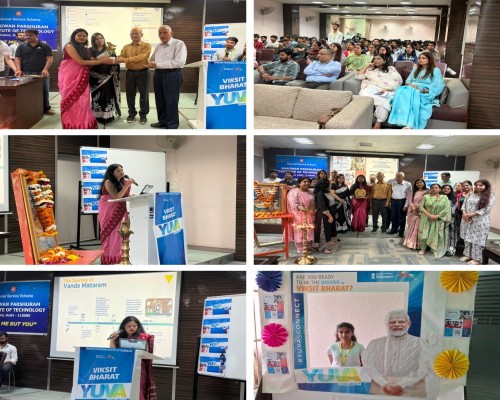
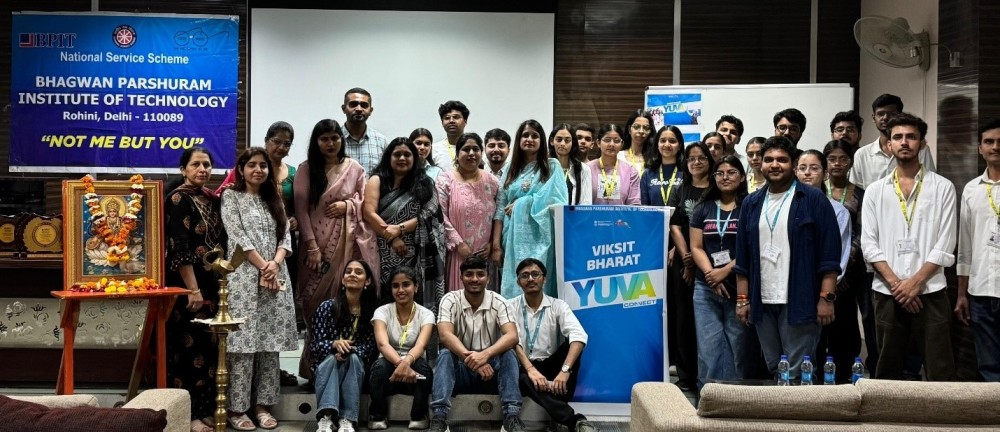
The NSS Unit of BPIT organized the Viksit Bharat Yuva Connect Program (VBYCP) to
encourage students to reflect on India’s vision for 2047. The event provided a platform for
students to share ideas and discuss how youth can contribute to the nation’s progress. It
highlighted the importance of responsible citizenship and active participation in society.
Overall, the program motivated students to play a meaningful role in building a stronger and
better India.
NSS Unit BPIT
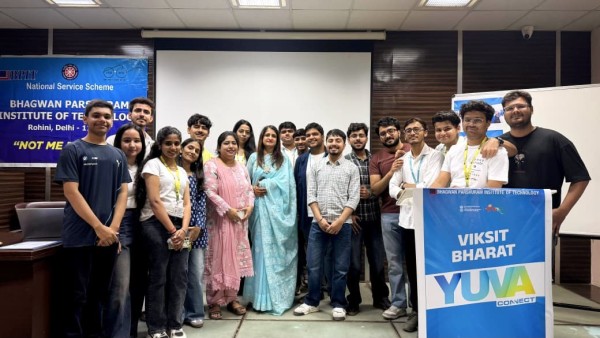
The NSS Unit at BPIT aims to instil a sense of social responsibility and a spirit of service among students, especially among those serving the underprivileged. With three active NSS units, BPIT takes pride in its volunteers who regularly participate in a variety of social and national service activities. These include celebrating national days, running awareness campaigns, hosting cultural programs, and launching community service initiatives.
Through the activities, the BPIT NSS Units inspire students to connect with society, develop leadership and communication skills, and grow into socially responsible and compassionate individuals. Guided by the motto “Not Me, But You” over 700 dedicated student volunteers work for the betterment of society.
MOTTO: "NOT ME BUT YOU"
ABOUT
NSS, the National Service Scheme, is a government-sponsored program in India aimed at fostering social responsibility and community service among young people. The program was launched in 1969 and it has been offering opportunities for students to volunteer their time and energy to serve society through various activities such as environmental conservation, health and sanitation drives, and awareness campaigns on various social issues. NSS volunteers work towards the betterment of society, and their efforts have contributed significantly to the development of rural and underprivileged areas. NSS is considered an integral part of the educational system in India as it helps inculcate a sense of civic duty and social responsibility among the youth.
Mission
Vision
The mission of the National Service Scheme (NSS) is to develop the personality of students through community service. It aims to create a sense of social responsibility, empathy, and citizenship among young people by involving them in various community development activities. The program encourages students to work towards the betterment of society, especially in the areas of education, health, environment, and social welfare. The NSS seeks to instill values such as discipline, leadership, and teamwork among students, and to develop their skills and potential for the benefit of society.
The vision of the National Service Scheme (NSS) is to build a strong and developed nation through the active participation of its citizens, particularly the youth. The NSS envisions a society where young people are not only well-educated but also socially responsible and committed to serving the community. The program aims to create a platform where students can learn and contribute to the development of the country while developing their own personalities and skills. The NSS envisions a future where every young person is motivated to work towards the welfare of the society, and where the spirit of volunteerism and social service is deeply ingrained in the national consciousness. Through its various initiatives, the NSS strives to build a culture of social responsibility and citizenship among the youth and to make them active participants in the nation-building process. Ultimately, the vision of the NSS is to create a generation of young leaders who are committed to making India a better place for all its citizens.
Outcomes of NSS
The National Service Scheme (NSS) has several positive outcomes for both the volunteers and the community. Some of the key outcomes of NSS are:
Personal Development: NSS provides an opportunity for personal development by promoting values such as discipline, leadership, teamwork, and social responsibility.
- Social Awareness: NSS helps to raise awareness about social issues among students and encourages them to actively participate in community development initiatives.
- Community Development: NSS plays a vital role in community development by providing volunteers for various initiatives such as health camps, tree plantation drives, and cleanliness drives. The program helps to address the needs of the community and provides assistance to those who are in need.Â
- Employability: NSS provides an opportunity for students to develop employability skills such as leadership, teamwork, communication, and problem-solving.
Faculty Coordinators
Head Coordinators
Dr. Shikha Gupta
ASST. PROFESSOR

Ms. POOJA MUDGIL
ASST. PROFESSOR
Faculty Coordinators

Dr. Pooja Rani
ASST. PROFESSOR

Dr. MUGDHA SHARMA
ASSISTANT PROFESSOR

Dr. Aseem Dubey
Assistant Professor

Dr. Charu Gupta (Maths)
ASST. PROFESSOR

Ms. Rajni Sharma
Assistant Professor
Ms. Priya Panchal
Assistant Professor
Ms. Seema Kaushik
Assistant Professor
Ms. Kirti Dalal
Assistant Professor
NSS Student Coordinators
Head Coordinators
| Harshita | IT | 2024 |
| Harshit | IT | 2024 |
Class Coordinators
Deepak IT A
PRIYANSHI IT A
SANYAM JAIN IT A
CHANCHAL CSE DS
HARSHILL KHERA CSE C
NAMAN BHARDWAJ
List of Event
LIST OF EVENT | DATE |
Break The Plastic Habit – Quiz | 20/06/25 |
Swachhta Abhiyan Online Quiz | 12/08/25 |
Swachhta Pledge and flag hosting (independence day) | 14/08/25 |
Clean Delhi Green Delhi mega march | 30/08/25 |
Food Donation Drive | 24/09/25 |
Mental Health Awareness Session | 06/11/25 |
Old Cloth Donation | 11/11/25 |
Nasha Mukt Bharat Abhiyan quiz | 15/11/25 |
Alcoholics Anonymous Awareness session | 29/01/26 |
Online Quiz on My Bharat Budget Quest | 17/02/25 |
Yuva Connect | 18/03/25 |
Viksit Bharat Quiz | 18/03/25 |
LIST OF EVENT | DATE |
Har Ghar Tiranga Campaign | 13/08/24 |
Udyamita Diwas | 21/08/24 |
Plantation Drive | 22/08/24 |
National Space Day | 23/08/24 |
NSS Orientation | 23/09/24 |
Swachhta Pledge | 24/09/24 |
Cleanliness Drive | 26/09/24 |
Workshop on Road Safety | 11/10/24 |
Lecture on Professional Development by Dr. Sonia Anand Dheer | 16/10/24 |
Mental Health Awareness by Dr. Gaurav Gupta | 24/10/24 |
Blanket Donation Drive | 09/12/24 |
Sexual Harassment at Work Prevention | 11/12/24 |
General Safety and Security Awareness | 28/01/25 |
Essay Writing Competition “Gandhi’s Influence on Modern Society “ | 30/01/25 |
Digital Poster Competition “Gandhi’s Core Principles” | 30/01/25 |
Food Donation Drive | 20/02/25 |
Seminar on Gate Preparation by PhysicsWallah | 17/03/25 |
What are the two main activities of NSS
The two main activities of the scheme are:
1. special camping programmes and
2. Regular activities.
Regular Activities: ÂThe aim of the Regular and special Camping Programme is to bring youth face to face with the community and make efforts to improve their life. The NSS volunteers are to devote about 80/120 hours in Regular Activities for the development society. Some broad areas of activities are enumerated below:-
(a) Environment Enrichment and Conservation:
The activities aimed at environment – enrichment would be organized under the sub-theme of “Youth for Better Environment”. The activities under this sub-theme would inter-alia, include:
(i) Plantation of trees, their preservation and upkeep (each NSS unit should plant and protect at least 1000 saplings)
(ii) Popularization the use of non-conventional energy;
(iii) Environmental sanitation and disposal of garbage & composting;
(iv) Prevention of soil erosion, and work for soil conservation,
(v) Watershed management and wasteland development
(vi) Preservation and upkeep of monuments, and creation of consciousness about the preservation of cultural heritage among the community.
(b) Health, Family Welfare and Nutrition Programme:
(i) Programme of mass immunization;
(ii) Working with people in nutrition programmes with the help of Home Science and medical college students;
(iii) Provision of safe and clean drinking water;
(iv) Integrated child development programmes;
(v) Health education, AIDS Awareness and preliminary health care.
(vi) Population education and family welfare programme;
(vii) Life style education centres and counsellingcentres.
(c) Programmes aimed at creating an awareness for improvement of the status of women:
They may include
(i) Programmes of educating people and making them aware of women’s rights both constitutional and legal;
(ii) Creating consciousness among women that they too contributed to economic and social well-being of the community;
(iii) Creating awareness among women that there is no occupation or vocation which is not open to them provided they acquire the requisite skills; and.
(iv) Fostering government schemes for women like Beti Bachao Beti Padhao.
(d) Social Service Programmes:
Depending on the local needs and priorities, the following activities/programmes may be undertaken:-
(i) Work in hospitals:for example, serving as ward visitors to cheer the patients, help the patients, arranging occupational or hobby activities for long term patients, guidance service for out-door-patients including guiding visitors about hospital’s procedures, letter writing and reading for the patients admitted in the hospital; follow up of patients discharged from the hospital by making home visits and places of work, assistance in running dispensaries etc
(ii) Work with the organisations of child welfare;
(iii) Work in institutions meant for physically and mentally handicapped;
(iv) Organising blood donation, eye pledge programmes;
(v) Work in orphanages, homes for the aged etc.;
(vi) Work in welfare organisations of women;
(vii) Prevention of slums through social education and community action;
(e) Relief & Rehabilitation work during Natural Calamities:
These programme would enable the students to understand and share the agonies of the people affected in the wake of natural calamities like cyclone, flood, earthquakes, etc. The main emphasis should be on their participation in programmes, and working with the people to overcome their handicaps, and assisting the local authorities in relief and rehabilitation work in the wake of natural calamities. The NSS students can be involved in:-
(i) Assisting the authorities in distribution of rations, medicine, clothes etc.;
(ii) Assisting the health authorities in inoculation and immunization, supply of medicine etc.;
(iii) Working with the local people in reconstruction of their huts, cleaning of wells, building roads etc.;
(iv) Assisting and working with local authorities in relief and rescue operation;
(v) Collection of clothes and other materials, and sending the same to the affected areas;
(f) Education and Recreations:
Activities in this field could include:
(i) Adult education (short-duration programmes);
(ii) Pre-school education programmes;
(iii) Programmes of continuing education of school drop outs, remedial coaching of students from weaker sections;
(iv) Work in creches ;
(v) participatory cultural and recreation programmes for the community including the use of mass media for instruction and recreation, programmes of community singing, dancing etc.;
(vi) Organisation of youth clubs, rural land indigenous sports in collaboration with Nehru Yuva Kendras;
(vii) Programmes including discussions on eradications of social evils like communalism, castism, regionalism, untouchability, drug abuse etc.;
(viii) Non-formal education for rural youth and
(ix) legal literacy, consumer awareness.
(X) Swacch Bharat Mission
(XI) Digital awareness,
(XII) Voter awareness.
(g) Solemnize Special National/international day’s /Month
(i) Important International Day’s for welfare of society
(ii) Important national day’s to commemorate imminent person of national fame.
(iii) Month as per government guideline.
The above is only an illustrative list of the type of activities that can be undertaken. Under the programme it would be open to each NSS Unit to undertake one of these programmes or any other
activity which may seem desirable to them according to needs. The NSS Unit should aim at the integrated development of the area selected for its operation which could be a village or a slum. It has also to be ensured that at least a part of the programme does involve manual work.
Special Camping:
The aim of the special Camping Programme is to bring youth face to face with the community and make efforts to improve their life. The NSS volunteers are to devote about 40/120 hours in Special Camping for the development society. Special Camping has been conceived as an opportunity to live with that community for 7 days, and experience the conditions and problems of the people. The NSS volunteers need to be inspired to take initiatives for the improvement of their condition. Although the focus of the Special Camps change periodically and regular programmes are organized in response to the community needs at the micro-level.